


Over the years, purchasing an iPad has become an increasingly complex task. With multiple models and overlapping features and accessories, there’s no longer a clear-cut way to recommend one iPad for one type of user. Still, Apple has a general idea of how it views its iPad lineup and who each model is aimed at.
Apple’s messages regarding the four different iPad products are basically divided into: The base iPad is for “everyday use,” the iPad mini is “small but powerful on the go,” the iPad Air is “Mac-class power without the weight of a Mac,” and the iPad Pro is “a professional for whom money is not an object.”
Below is a quick tour of how Apple promotes each device, along with a little bit of my take on what Apple actually means (or doesn’t say) when promoting its lineup.
iPad
“It’s adorable. You can draw it. It’s like magic.”

From the outset, Apple touts the current 11th generation iPad as the go-to product for casual users who want a colorful and fun device “for the things you do every day,” but that’s not really saying much.
translation? Streaming on the couch, FaceTime with grandma, doing homework in Pages, and occasionally doodling with my Apple Pencil. Oh, and there’s no support for Apple Intelligence. Some might say this is a plus at this point.
On its webpage, Apple emphasizes the full-screen design without a home button and the compatibility of the Apple Pencil and Magic Keyboard Folio. This may make it a bit difficult to tell the models apart, but these are certainly welcome features for those who choose this.
My 2 cents: Despite the lack of Apple Intelligence support, this is still a cost-effective Goldilocks option. But the real pitfall is storage. 128 GB will eventually become standard at $349, but depending on how you use it, this might be fine. quick. If possible, buy 256 GB or set aside a cloud budget.
Technical specifications: 11-inch Liquid Retina display with sRGB color and True Tone, A16 chip, 4K 12MP wide rear camera, landscape 12MP ultra-wide front camera, Apple Pencil 1st generation and USB-C support, Magic Keyboard Folio support.
iPad Air
“Whoosh”

Starting at $599, Apple sells the iPad Air as an iPad for more serious users. Climbing the iPad ladder, this is the first option to offer two screen sizes and Apple Intelligence support (which is also available on the iPad mini, which we’ll talk about later).
Apple uses words like “powerhouse” a lot in its message, which should convey that even though it’s not an iPad Pro, you can expect some pretty heavy-duty tasks that the 11th generation iPad won’t be able to accomplish. The colorway also serves as a reminder of the fact that while it’s a casual and colorful iPad, it’s definitely not a fun, quirky, suffix-free iPad.
However, if you are aiming for portability, there are some things to consider. At 1.36 pounds, the 13-inch iPad Air is actually heavier than the similarly sized iPad Pro at 1.28 pounds. In terms of performance, the iPad Air’s M4 chip is a little different than the iPad Pro’s M4 chip, with an 8-core CPU and 9-core GPU, while the iPad Pro’s M4 chip has up to a 10-core CPU and 10-core GPU.
Still, the M3 iPad Air can already handle a lot of Final Cut and Lightroom-type tasks, so the M4 iPad Air will certainly do the same. That’s a $400 savings over the entry-level Pro.
My 2 cents: If you want Mac-level frustration but can’t justify it with “Simpossible” money (we’ll get to that in a moment), this is for you. Remember: Magic Keyboard and Pencil Pro are still additions.
Technical specifications: 11-inch or 13-inch Liquid Retina display with P3 Wide Color, True Tone, and anti-reflective coating, M4 chip with Apple Intelligence support, 4K 12MP wide rear camera, landscape 12MP ultra-wide center stage front camera, Apple Pencil Pro and USB-C support, Magic Keyboard support for iPad Air.
iPad Pro
“It’s possible if it’s thin.”
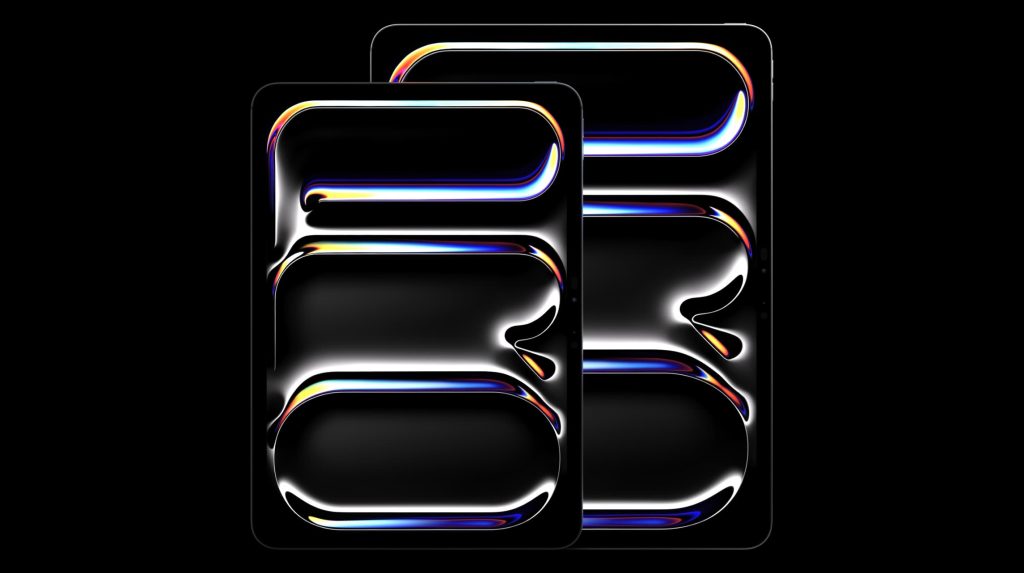
Starting at $999, the iPad Pro is the closest thing to a serious Mac replacement tablet Apple has ever released. In its communications, Apple emphasizes how incredibly thin this iPad is, and it should be. At 5.1mm thick, iPad Pro is surprisingly slim for its storage capacity.
Apple also goes all-in on words like “fast” and “advanced” on the product page, featuring connectivity such as being able to drive up to 6K external displays and reaching data transfer speeds of up to 40Gb/s.
But here’s the problem. If you’re not salivating at the fact that the iPad Pro’s M4 chip provides significant headroom for multi-layer 8K ProRes, I’m sure the iPad Air may already be overkill for your (current) needs.
My 2 cents: If you’re still asking yourself, “Do I need an iPad Pro?”, you probably don’t.
Technical specifications: 11-inch or 13-inch Ultra Retina XDR display with ProMotion, P3 wide color, True Tone, anti-reflective coating, nanotexture display glass option on 1TB and 2TB models, M4 chip with Apple Intelligence support, 4K 12MP wide rear camera with ProRes support, landscape 12MP center stage TrueDepth front camera, Apple Pencil Pro and USB-C support, Magic Keyboard for iPad Pro Support.
iPad mini
“It’s great to be alone.”

Apple’s copy is basically just a long, humble boast that it can fit in your coat pocket and still run the same apps as its more powerful sibling.
Doctors love it for their rounds, pilots bolt it to the yoke, and commuters enjoy reading with one hand. While most reviews confirm the device’s versatility, some caution that it remains a niche purchase.
My 2 cents: The iPad mini sometimes seems to be promoted and commented on as Apple’s answer to Samsung’s productivity-focused phones like the Galaxy Note, but the truth is that this may be more of a consumer product than a productivity device per se. You can scribble on PDFs or make beautiful handwritten notes in class, but there’s a reason you’ve never seen Apple open up a spreadsheet to promote the iPad mini.
Technical specifications: 8.3-inch Liquid Retina display with P3 Wide Color, True Tone, and anti-reflective coating, A17 Pro chip with Apple Intelligence support, 4K 12MP wide rear camera, 12MP Center Stage front camera, Apple Pencil Pro and USB-C support, Bluetooth keyboard support.
Big, big, big final disclaimer
Some people have miraculously managed to run an entire company on an iPad mini, while others have bought an iPad Pro and returned it saying it didn’t do anything. More than any other Apple product, your mileage will vary. a lot.
This guide is supposed to explore how Apple sells each iPad and provide some commentary on how it looks at all its expectations and reality. If your experience is different, talk about it in the comments. For readers who are still confused, every little bit of information will be helpful.
Worth checking out on Amazon





