


Before digging deeper into this topic, I would like to mention that I love the iPados 26. Yes, it’s the first beta, so there’s still a lot of tweaks and optimizations to be done. But overall, it was something I’ve been hoping for years on iPads. That being said, some still prevent it from being a true MacBook alternative for some people. So, if you’re discussing between an iPad Pro or MacBook, here are five important things that the iPads still can’t do:
Catch the video below to see a direct comparison of the new iPados 26 and Macos 26
I wanted to mention this first. Because it appears to be the most common issue with the iPad that has appeared. For certain users, like developers and software engineers, you can see how this can stop everything on iPados. The iPados 26 doesn’t provide device access yet, and there’s no native way to run Xcode directly on your iPad or build apps directly. You can use apps like Textastic and Swift’s playgrounds for basic coding, but they are not the same as burned basic developer tools. There is also a set of users who want to coordinate and navigate the OS using terminals and command lines. This cannot be done on an iPad. So, if you absolutely need device access, iPados is not just for you.
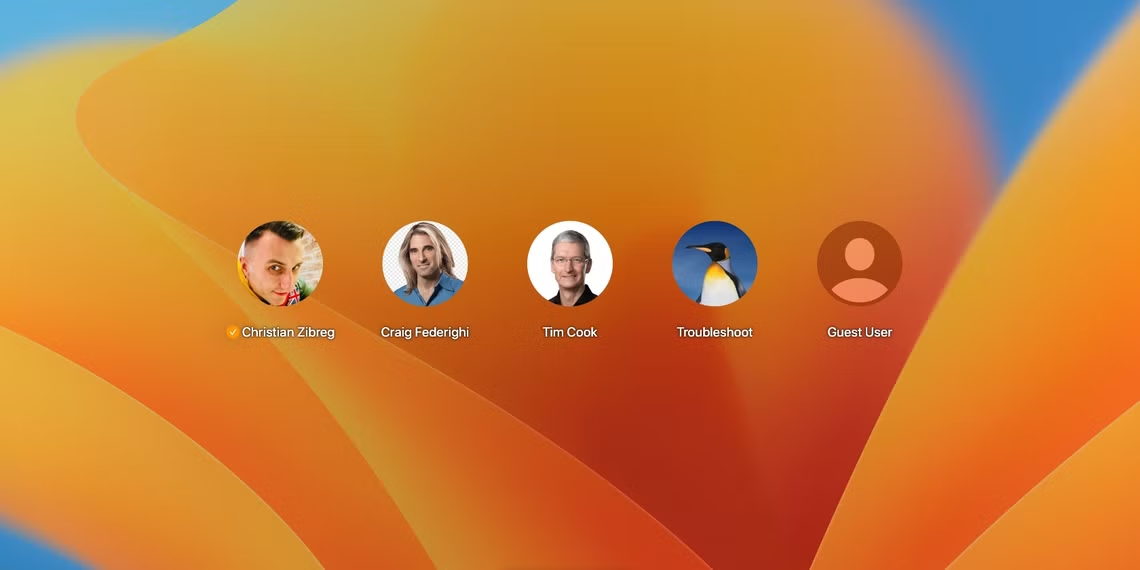
No multi-user support yet
This is another confusing thing for me. Most iPads in the hands of consumers claim to be shared iPads. So it’s strange that there is no multi-user functionality yet (other than educational use cases). Macs almost always allow this. You can either log off your account to create guest mode or have someone else have their own private account on the same hardware. Accounts are completely isolated with your own app, information, Apple ID and more. The two accounts live on one MacOS computer, but are completely siloed.
The iPad was made with the same emotions as the iPhone. This is because it becomes a personal device. Therefore, there is no way to create an account for yourself and for your important others (for example). There are workarounds like custom focus mode and guided access, but at the end of the day, one Apple ID is signed and everyone’s info. If the $499 Mac Mini can create multiple user accounts, then the $1300 iPad Pro should also be available.
External display function
Some iPads in the lineup support an actual extended monitor experience, making the iPads 26 even better. I love using my M4 iPad Pro with my benq 5k monitor. It feels natural, expands surprisingly, and is only ten times my productivity. But again, my iPad Pro with the Magic Keyboard was over $2000. At that price, I should be able to get a secondary monitor. Extended Monitor Support will be terminated in just one. So if you’re someone with a multi-monitor setup, unfortunately the iPad can’t handle it. Another issue with the iPad is the lack of clamshell mode. Therefore, if you close or lock the iPad, the external monitor will also stop. This is a shame for those who like to have a clean and minimal setup.
Limited customization of surroundings
This has always bothered me. There is a major lack of customization when it comes to traditional peripherals such as mice, trackpads, keyboards, and external webcams. For example, I use Logitech anywhere on a 2S mouse and it’s great. It connects and works as a mouse on the iPad Pro. For example, Logitech has custom software that you can download, allowing you to customize each hotkey on your mouse. The app does not work on the iPad. Although you can do some customizations on your peripherals via iPados accessibility settings, they are not as robust as custom 1st part software. The same applies to keyboards and webcams. Most brands have dedicated apps or software to help manage your surroundings. The iPad does not support it. We hope more companies take this into consideration and start creating app store apps to help with this!
Audio Management
This isn’t a big deal, but it does come up from time to time. There are a few instances that I like to see two audio sources moving at once. For example, I like to edit videos that have quiet ambient noise in the background. I can’t do this on my iPados yet. iPados is still rooted from iOS, so if you start listening to Apple Music after playing audio from the YouTube app, the YouTube video will pause completely and play Apple Music Audio. MacOS allows you to play audio from as many sources as your RAM can handle.
I think the iPados 26 brought far better audio with the management tool, including using peripherals at the system level to change the default microphone settings. However, I think this audio output situation can be easily corrected.
Final Thoughts
As mentioned in the intro, the iPad Pro is my main computer and I love using it every day. I also think the iPados 26 has further blurred the overall line of debate on “what is a computer?” The iPad can be a complete computer for even more people. However, some limitations and use cases still prevent it from being a computer exchange for everyone. I just wanted to shed some light on some of the things you should consider if you want to go to a full-on iPad.
We don’t take into consideration price differences, such as the M4 MacBook Air being under $900 on Amazon or the M4 Mac Mini being under $500.
What do you think? Is there anything else holding an iPad for me? Drop your thoughts down – I’m always curious about what people come across on iPados.
Favorite iPad accessories
(TagStoTRASSLATE) iPados 26



