


Getting your hands on a new iPad is one of the most exciting experiences. If you set it up correctly, you have a beautiful tablet-shaped glass that can do basically anything. The most tedious part about the iPad is setting it up and learning how to use it. Especially now, with the update to iPadOS 26, people have quietly changed the way their iPad works in a very meaningful way. So before you start setting up and downloading a ton of apps, here’s what you should do right away to make your iPad experience faster, cleaner, and more intentional from day one.
Be sure to check out our complete guide on how to properly set up your iPad.
Let’s go through each step.
1. Set up new windows and multitasking
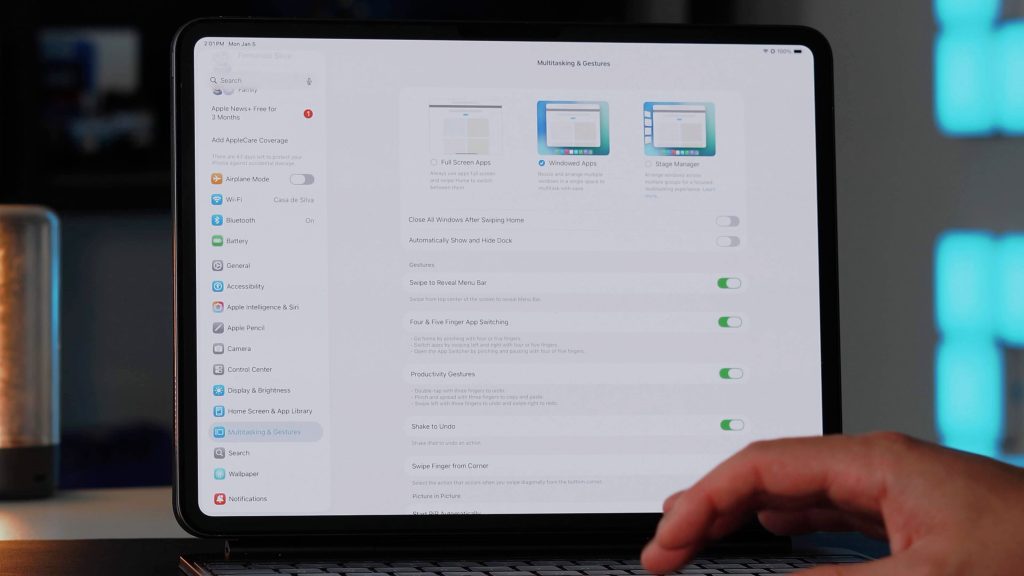
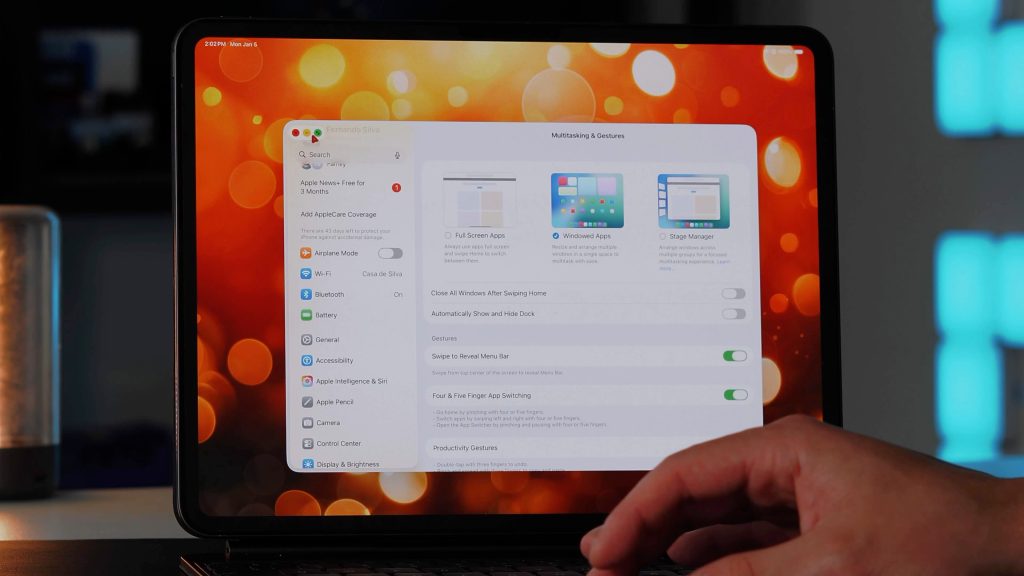
The update to iPadOS 26 adds a whole new way to experience your iPad. Apple brought true Mac-like windowing and multitasking to the iPad. But the great thing about this is that it’s optional. If you’re not interested in a new desktop-like window system, you can keep it as is. Here’s how to decide:
- Open settings
- Go to multitasking and gestures
- enable the new one window app Options or full screen app options
For me, this is the most important first step. Because it determines how you experience your iPad on a daily basis. If you’re comfortable with the old full-screen app method, go for that choice. However, if you want a computer-like experience, choose the newer version of Multitasking. What I like is that there are options and there are no wrong answers.
2. Organize your file apps
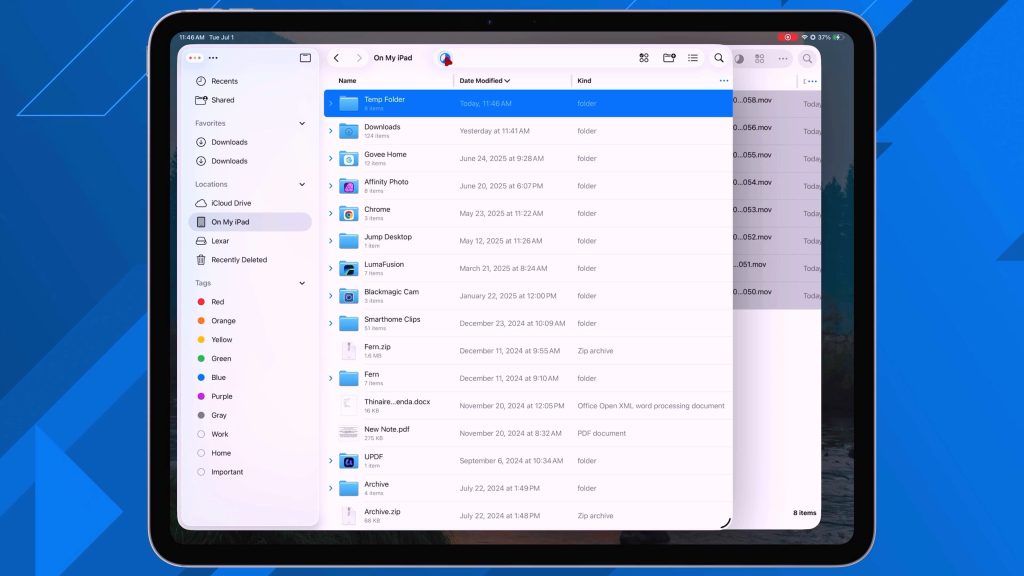
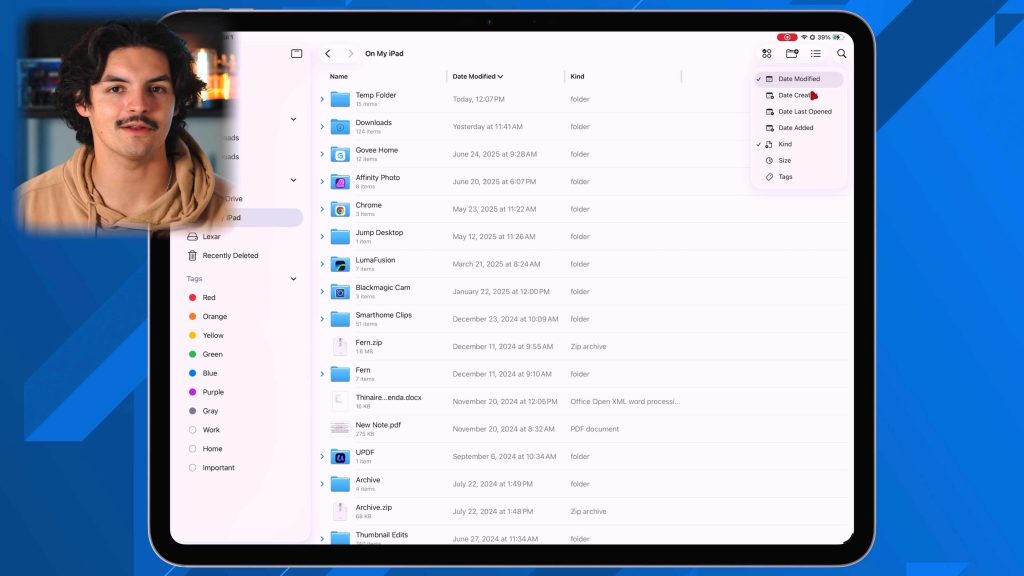
The Files app for iPad has always been a cornerstone of the iPadOS experience. Compared to the Finders app, it felt thin and lacked customization options. Apple changed that with iPadOS 26. There’s a lot more you can do.
- Change column size
- Add additional column categories
- Change folder colors and add emojis to customize
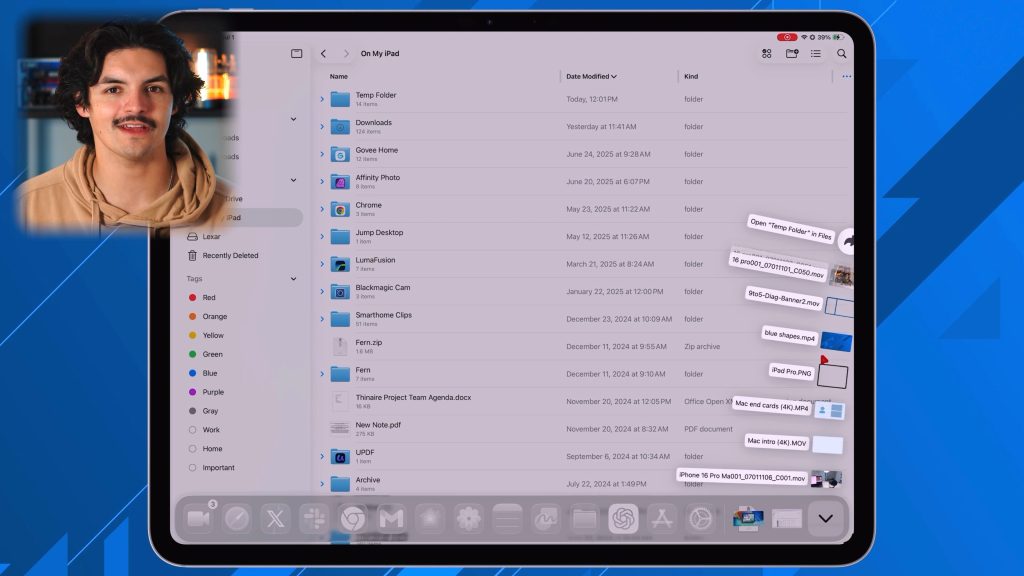
- Place the folder on the dock. (It’s a big deal for me)
- Background data transfer is now more intuitive
- Layout changes become much easier
The Files app is more like the Finder, which I think is very suitable for both professional and casual workflows. You can now place your iCloud Desktop folder in the Dock, giving you easy access to all your content from your iPad while customizing. It’s truly magical.
3. Customize your control center
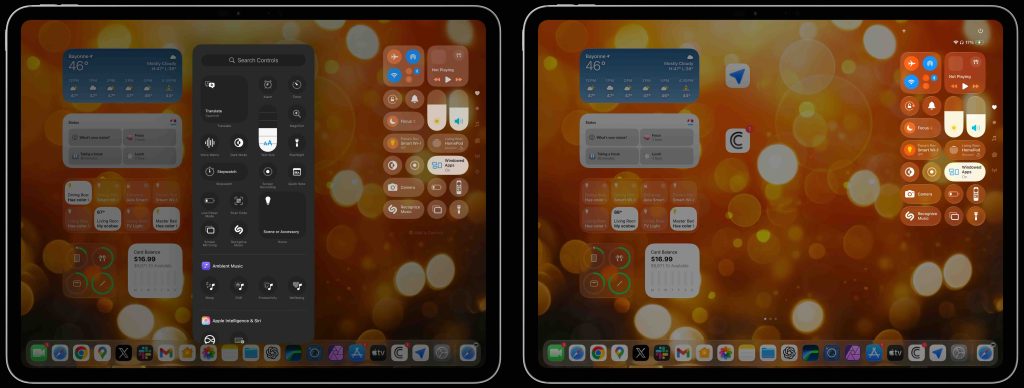
Control Center has also been revamped with iPadOS 26. Control Center gives you even more customization and options. This is a feature that is often underestimated and rarely discussed. It becomes an extension of your home screen and adds a ton of utilities. Customization is very easy and works just like customizing your home screen. Here’s how:
- Swipe down from the top right to open Control Center
- Long press to edit
- Add controls for screen recording, notes, low power mode, focus, and more
- Sort frequently used tools for easy access
Customization possibilities are nearly endless, with the ability to add a variety of utilities such as smart home controls, shortcuts, and accessibility options. We also added pagination, allowing you to display multiple pages of widgets and controls. I like Control Center because it lets you add quick access to settings that you don’t want to see on the home screen.
4. Customize your home screen and lock screen
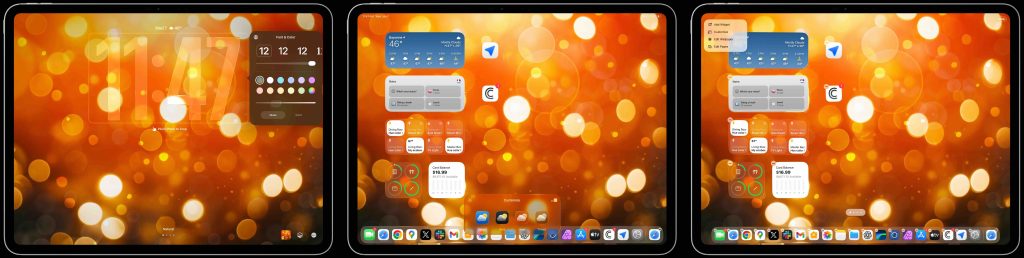
The Home screen and Lock screen are the two places you interact with your iPad most often, but most people never touch the defaults. With a few small changes, you can make your iPad feel cleaner, more personal, and much more useful every time you pick it up. These settings are also very easy once you know how.
- Long press on the home screen until the app starts shaking
- Tap Edit in the top left corner
- From there, you can add widgets, change app icon color and size, edit wallpaper, and add/remove pages.
- You can edit the lock screen in a similar way. You can also add widgets, change the wallpaper, and change the clock font
Now, when you open your iPad, it will be set up the way you want it. The lock screen shows quick information at a glance, and the home screen shows all the apps and actions you use most. Setting this to a flow will speed things up a lot.
5. Notification management
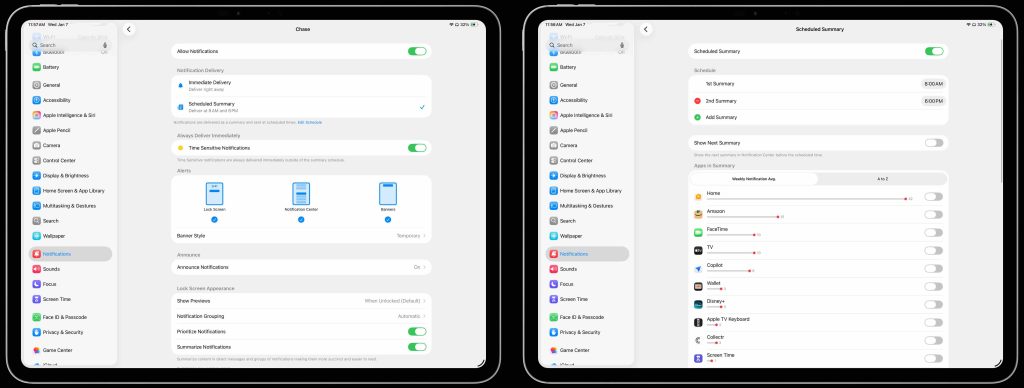
This is a big deal for me. There are hundreds of apps installed on your iPad, but if they all send you notifications, it can become overwhelming and you’ll miss important ones. So this is what I do on every iPad and it only takes a few minutes and keeps me sane. Here’s how:
- Open settings
- Go to notifications
- Tap on “Scheduled Summaries” to turn it on
- Select delivery time for non-urgent alerts
- Go back and check individual apps
- Turn off notifications for apps that aren’t really important
Once this is done, the setup is complete. I set up a schedule summary to display important but time-independent notifications. Next, I want to make sure that the apps I want to get nitriding are set to immediate. Finally, I like to turn off notifications from less relevant apps.
Final thoughts etc.
You don’t need a ton of apps or complicated workflows to make your iPad great. With a little setup, iPadOS 26 makes your iPad faster, more intuitive, and feels more personal. While the change to iPadOS 26 was great for me, I understand that not everyone wants computer-related features on their iPad. So we’re glad that Apple has allowed its customers to stick to the old ways as well.
So if you take the time to customize your Home and Lock screens, learn core multitasking gestures, organize your files, and clean up your notifications, your iPad will quickly become easier to use and more enjoyable.
Be sure to check out our complete list of 10 things to do on video. But what do you think? Are you a fan of iPadOS 26? What’s the first thing you’ll do with your new iPad?


(Tag translation) iPadOS 26



